
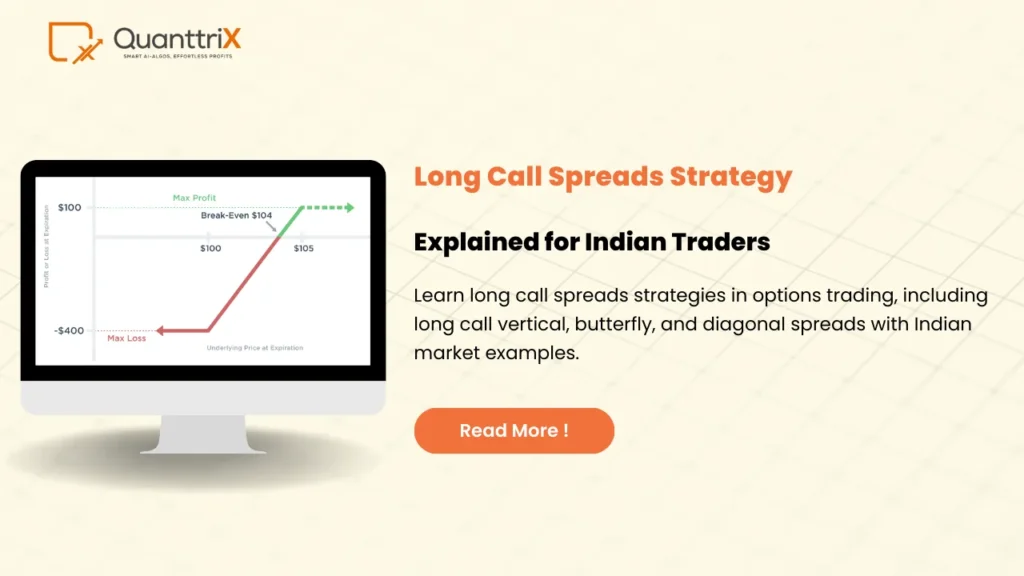
Long Call Spreads Strategy Explained for Indian Traders
Options trading in the Indian stock market has grown rapidly, especially among traders looking for strategies that balance risk, reward, and capital efficiency. While buying naked call options can deliver high returns, it also comes with rapid time decay and high premium risk. This is where long call spreads become useful.
A long call spread allows traders to express a moderately bullish view while limiting losses and reducing upfront costs. Instead of relying on a single call option, the trader combines multiple call options to structure risk more intelligently.
Long call spread are taught as a core options strategy for Indian traders because they work well in instruments like NIFTY, BANK NIFTY, FINNIFTY, and liquid stock options. This article explains everything you need to know about long call spread—step by step, with Indian market context.
What Is Long Call Spread?
A long call spread is an options strategy where a trader:
- Buys a call option at a lower strike price
- Sells another call option at a higher strike price
- Both options have the same expiry (in most cases)
The goal is to:
- Reduce the cost of buying a call option
- Cap the maximum profit
- Limit the maximum loss
This strategy benefits when the underlying asset moves up gradually, not explosively.
Why Indian Traders Use Long Call Spreads?
Indian options markets have certain characteristics:
- High time decay (Theta)
- Frequent range-bound phases
- Weekly expiries increasing noise
Long call spread help Indian traders because they:
- Lower option premium outflow
- Reduce Theta decay impact
- Offer defined risk and reward
- Work well in index options
This makes them suitable for traders who want controlled bullish exposure instead of aggressive speculation.
When Should You Use a Long Call Spread?
A long call spread is ideal when:
- You are bullish, but not extremely bullish
- You expect a gradual price rise
- Implied volatility is moderate to high
- You want defined risk
Avoid this strategy when:
- You expect a sharp breakout
- Volatility is extremely low
- The market is strongly range-bound
Long Call Vertical Spread
What Is a Long Call Vertical Spread?
A long call vertical spread is the most basic form of a long call spread.
Structure:
- Buy 1 ATM or ITM call
- Sell 1 OTM call
- Same expiry
This creates a bullish but capped strategy.
Example
Assume:
- NIFTY is trading at 22,000
Strategy:
- Buy 22,000 CE
- Sell 22,300 CE
If NIFTY rises gradually toward 22,300, the strategy profits.
Payoff Characteristics
- Maximum Loss: Net premium paid
- Maximum Profit: Difference between strikes – premium paid
- Breakeven: Lower strike + premium paid
This makes it far safer than buying a naked call.
Long Call Butterfly Spread
What Is a Long Call Butterfly Spread?
A long call butterfly spread is a low-cost, range-focused strategy built using three strike prices.
Structure:
- Buy 1 lower-strike call
- Sell 2 middle-strike calls
- Buy 1 higher-strike call
All options have the same expiry.
Market View
- Neutral to mildly bullish
- Expect price to expire near the middle strike
This strategy is often used around:
- Events
- Low volatility phases
- Expiry-week trades
Example
Assume NIFTY is at 22,000:
- Buy 21,800 CE
- Sell 22,000 CE (2 lots)
- Buy 22,200 CE
If NIFTY expires near 22,000, the butterfly delivers maximum profit.
Key Characteristics
- Low cost strategy
- Limited profit and limited loss
- Highly sensitive to expiry price
This strategy requires precision and patience.
Long Call Diagonal Debit Spread
What Is a Long Call Diagonal Debit Spread?
A long call diagonal debit spread combines:
- Different strike prices
- Different expiries
Structure:
- Buy a longer-expiry call (lower strike)
- Sell a shorter-expiry call (higher strike)
This strategy benefits from:
- Time decay of the short option
- Gradual price movement
Why Do Indian Traders Use It?
Diagonal spreads are popular in:
- Weekly options trading
- Index options
- Trending but slow markets
They allow traders to:
- Reduce cost
- Adjust positions dynamically
- Roll short legs weekly
Example
- Buy NIFTY next-month 22,000 CE
- Sell current-week 22,300 CE
If NIFTY rises slowly, the sold option expires worthless, and the long option retains value.
Comparison: Different Long Call Spread
Strategy | Market View | Risk | Reward | Complexity |
Long Call Vertical | Moderately bullish | Limited | Limited | Low |
Long Call Butterfly | Neutral to mildly bullish | Very low | Limited | Medium |
Long Call Diagonal Debit | Mild bullish with time decay | Limited | Flexible | High |
Greeks Impact on Long Call Spreads
Understanding Greeks is critical.
Delta
- Positive but capped
- Less aggressive than naked calls
Theta
- Lower negative impact
- Butterfly can even be Theta positive near expiry
Vega
- Sensitive to volatility changes
- Rising volatility benefits long legs
Long call spread help control Greeks, making them suitable for disciplined traders.
Common Mistakes Indian Traders Make
- Expecting unlimited profit
- Using spreads in high-momentum breakouts
- Ignoring liquidity in stock options
- Not adjusting positions near expiry
Spreads require planning, not impulsive trading.
Long Call Spread vs Buying Naked Call
Aspect | Long Call Spread | Naked Call |
Cost | Lower | High |
Risk | Defined | High |
Reward | Capped | Unlimited |
Time decay impact | Lower | High |
Suitability | Consistent traders | Aggressive traders |
For most Indian retail traders, spreads are more sustainable.
Risk Management Tips
- Trade only liquid options
- Avoid illiquid stock options
- Use index options for learning
- Don’t oversize positions
- Respect expiry dynamics
Options spread reward discipline over excitement.
Conclusion
Long call spreads are one of the most practical and risk-controlled strategies available to Indian options traders. Whether it is a long call vertical spread, long call butterfly spread, or long call diagonal debit spread, each variation serves a specific market condition.
Instead of chasing quick profits through naked calls, traders who use spreads focus on probability, structure, and discipline. These strategies work particularly well in Indian index options, where time decay and volatility play a major role.
For traders aiming for consistency rather than excitement, mastering long call spread is an essential step in becoming a professional options trader.
FAQ'S
What is long call spread?
A long call spread involves buying one call and selling another call to reduce cost and limit risk.
Is long call spread bullish?
Yes, it is used when traders expect a moderate upward move.
What is a long call butterfly spread?
It is a low-cost strategy designed to profit when price expires near a specific level.
What is a long call diagonal debit spread?
It combines different expiries and strikes to benefit from time decay and gradual price movement.
Are long call spreads suitable for beginners?
Yes, they are safer than naked options when learned correctly.